 Thomas Chardon



 Malasia

-
Nº81
 Fecha: 2017-01-25 - 09:00
-
 Profundidad máxima: 22.3m Duración: 62mins
Fotos

No hay fotos para esta inmersión
- Agua: Salada
Equipo específico utilizado
- Pesos: 2 kg
Buceadores recientes en Mabul
Fotos recientes en Mabul
Tienda de buceo & compañeros
 Buceo con Scuba Junkie

Enlace a este sitio:
- Lugar:
- País:
- Zona:
- Zona acuática:
Perfil de la inmersión
- 1. Air
- 12L Steel
- Profundidad media: 14.3m
Datos proporcionados por EOL.org



Especies identificadas
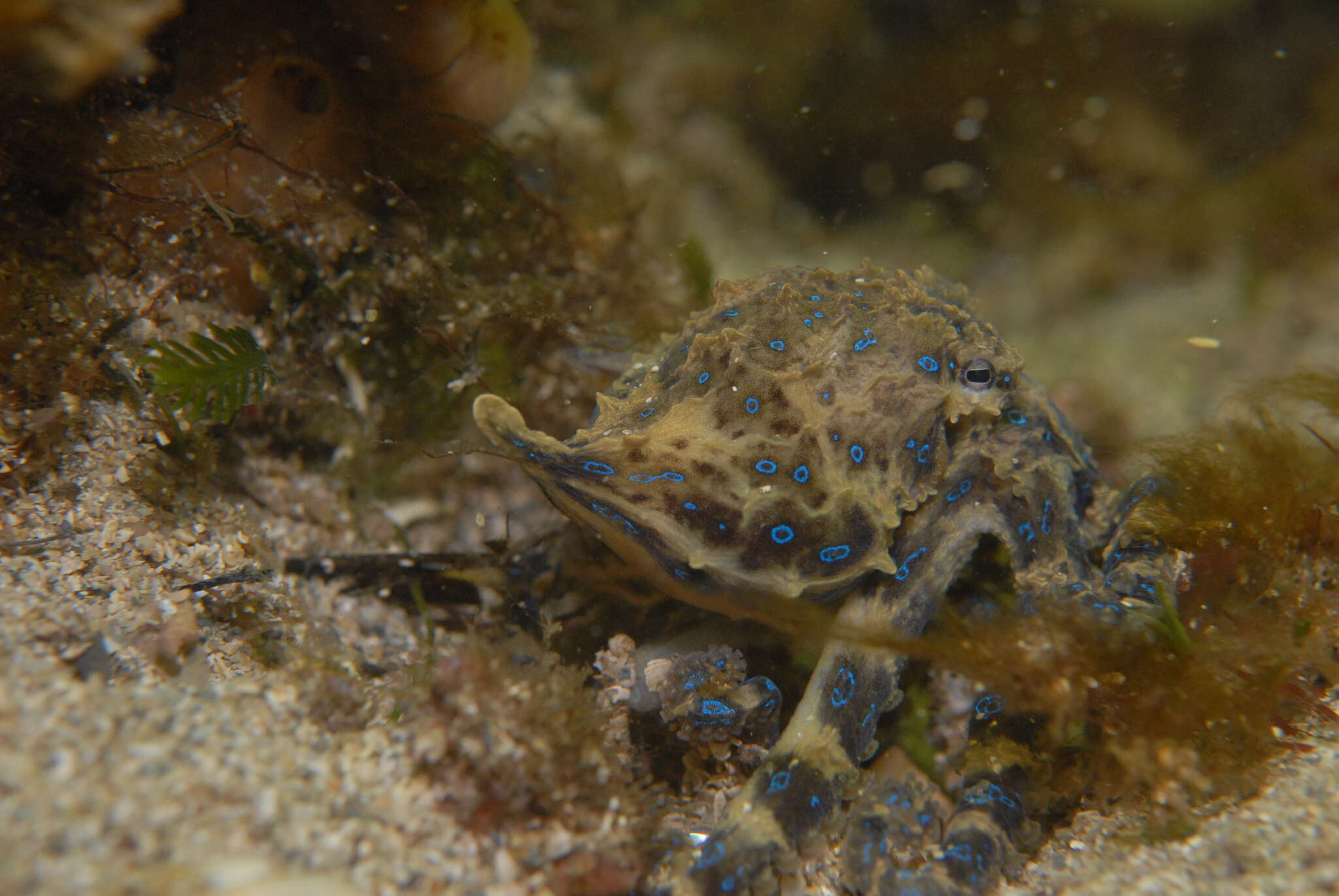
Hapalochlaena maculosa (Hoyle, 1883) (Blue-ring octopus)
Chelonia mydas Linnaeus 1758 (Green Turtle)
Green turtles are long-lived and may take up to 59 years to reach sexual maturity Undertaking tremendous feats of navigation, adults return to the same beach to breed each season, part of the population in Brazil astonishi...
Leer más
Leer más
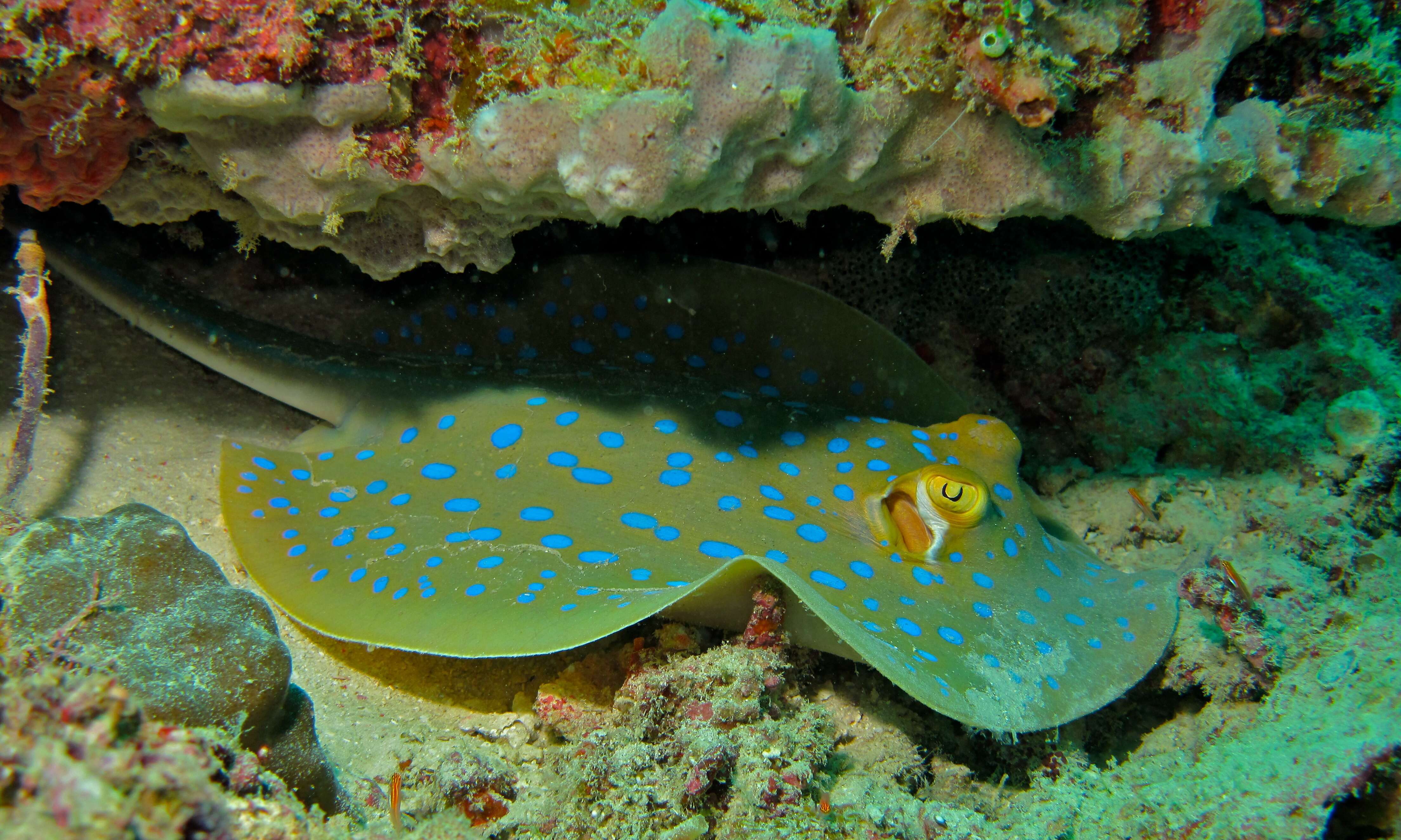
Taeniura lymma (Forsskål, 1775) (Bluespotted ribbontail ray)
Blue-spotted stingrays live alone or in small groups , migrating in large schools into shallow sandy areas on the rising tide in order to feed, and dispersing back into the ocean as the tide falls to shelter in the coral cr...
Leer más
Leer más
Vir philippinensis Bruce and Svoboda, 1984
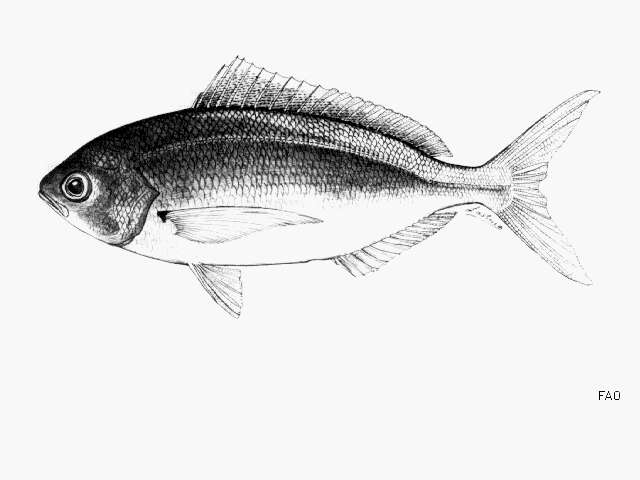
Caesio teres Seale, 1906 (Yellow and blueback fusilier)
Found primarily around coral reefs, with a preference for coralline lagoons. Feeds on zooplankton in large midwater groups. Forms schools with other caesionids. Migrates to select areas around the reef to spawn near the ...
Leer más
Leer más
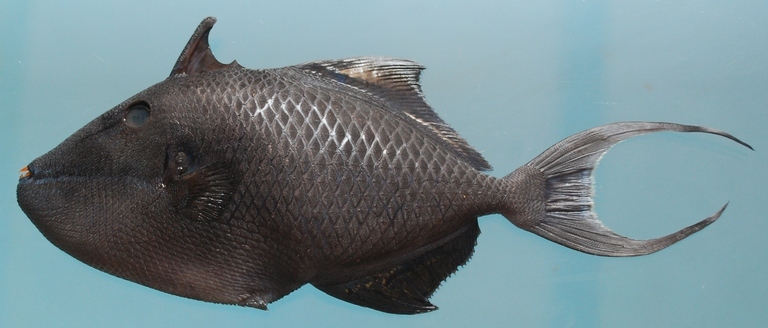
Odonus niger (Rüppell, 1836) (Redtoothed triggerfish)
Inhabits reef channels or along slopes that are subject to strong currents . Occur in current-swept seaward coral reefs. Usually form aggregations and feed on zooplankton as well as sponges . Juveniles associated with is...
Leer más
Leer más
Nemateleotris magnifica Fowler, 1938 (Fire goby)
Inhabits upper portions of outer reef slopes . Benthopelagic . Hovers above the bottom, facing the current to feed on zooplankton, copepods, and crustacean larvae. Several individuals may share the same hole . Has a hab...
Leer más
Leer más
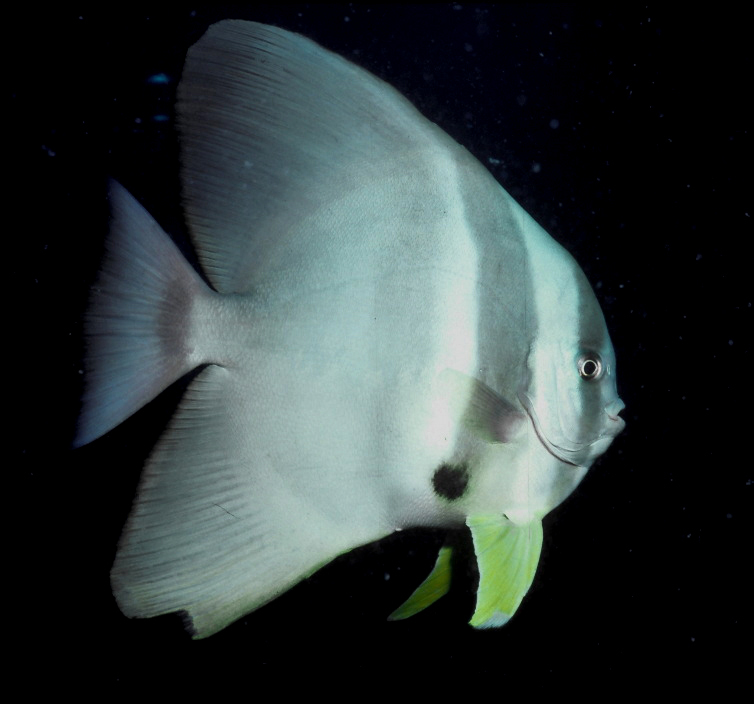
Platax pinnatus (Linnaeus, 1758) (Dusky batfish)
Adults are generally solitary and found under overhangs of steep outer reef slopes to a depth of at least 20 m. Juveniles are encountered in mangroves and inner sheltered reefs where they seek shelter in caves or under led...
Leer más
Leer más
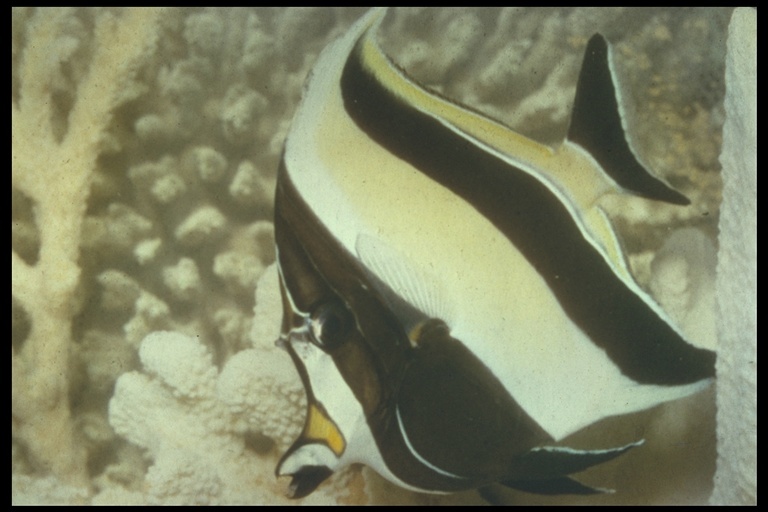
Zanclus cornutus (Linnaeus, 1758) (Moorish idol)
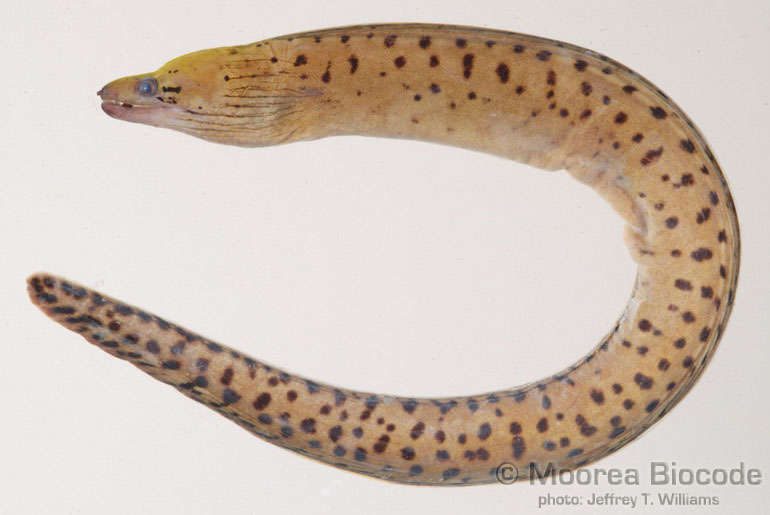
Gymnothorax fimbriatus (Bennett, 1832) (Fimbriated moray)
Occurs in lagoons, reef flats and seaward reefs . Prefers protected inshore waters among dead corals, common in harbors and small caves . Probably nocturnal . Feeds on fishes and crustaceans . Possibly a protogynous hermaphrodite .
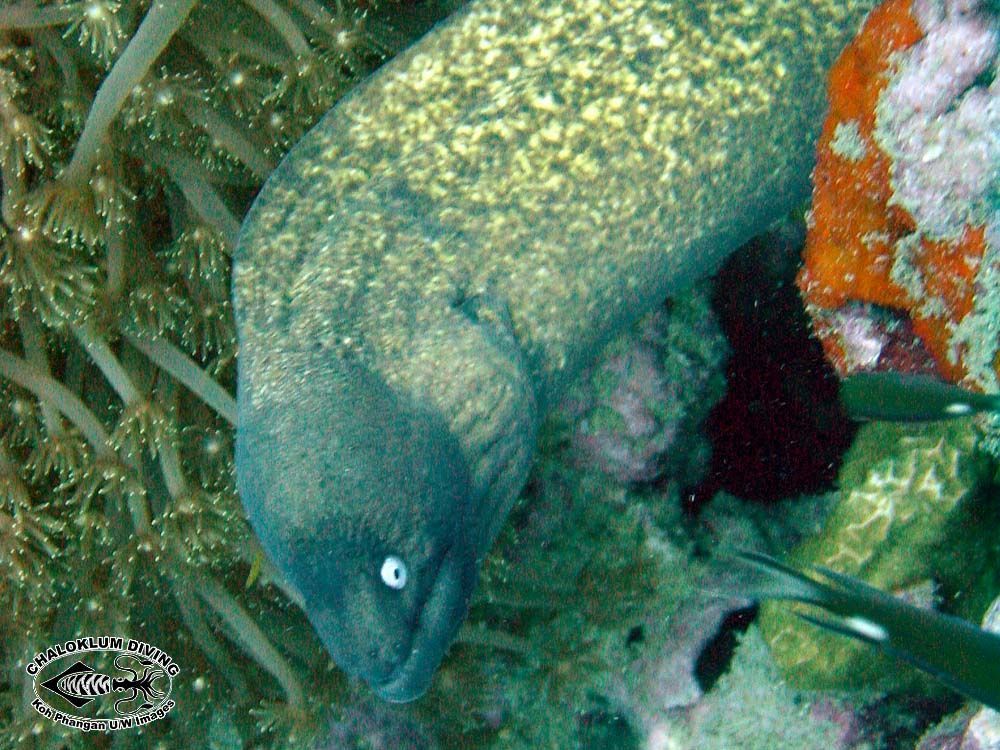
Gymnothorax thyrsoideus (Richardson, 1845) (slender moray)
Fairly common inhabitant of reef flats where it is usually encountered in shallow tidal pools. Often in shipwrecks; usually in pairs or small aggregations, and shares habitat with other morays .
Pterois antennata (Bloch, 1787) (Broadbarred firefish)
Occurs in lagoon and seaward reefs. Hides in crevices under rocks and coral formations during the day and hunts at night. Typically with head towards the safety of their hide-out or narrow passage . Feeds on shrimps and ...
Leer más
Leer más
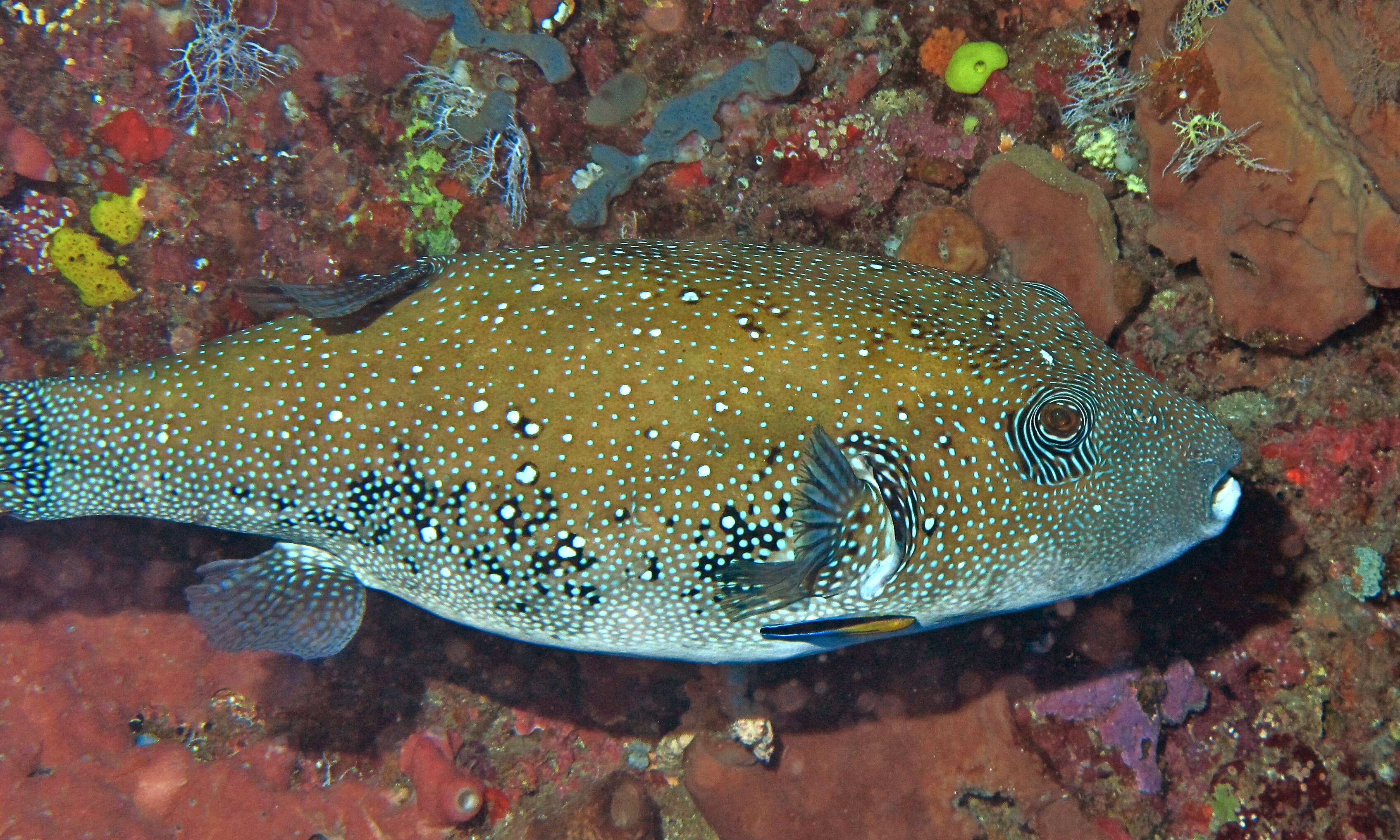
Arothron caeruleopunctatus Matsuura, 1994 (Blue-spotted puffer)
Found primarily in coral reefs. Also occurs in temperate waters.
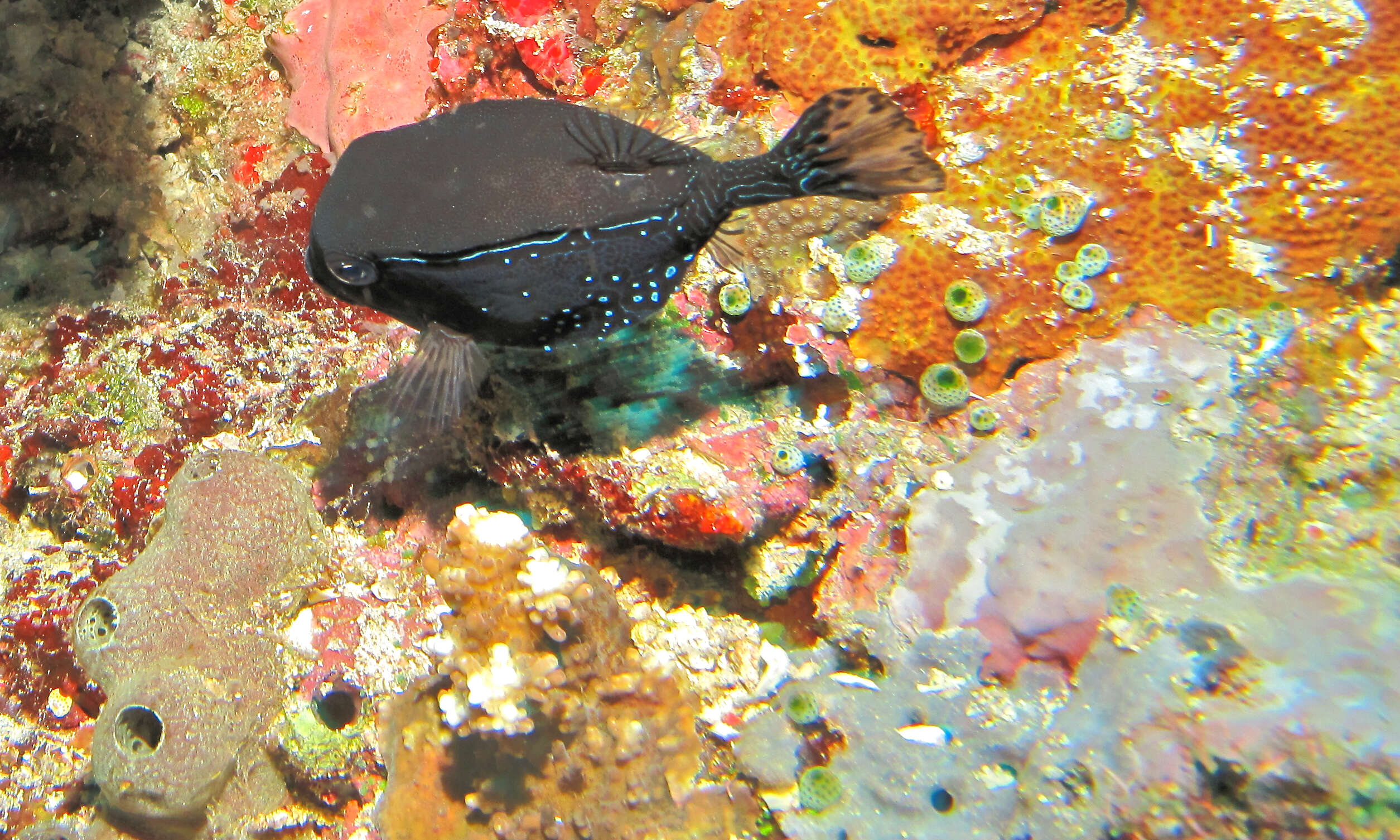
Ostracion solorensis Bleeker, 1853 (Reticulate boxfish)
Inhabits clear coastal reefs in rich invertebrate habitat on shallow crests or upper zone of slopes to about 15 meters depth . Relatively uncommon inhabitant of coral rich areas of seaward reefs. Sexually dimorphic .
Cymbacephalus beauforti (Knapp, 1973) (Crocodile fish)
Lives on sand or rubble substrates of sheltered or semi-exposed reefs to a depth of at least 8 m . Well camouflaged on reefs .
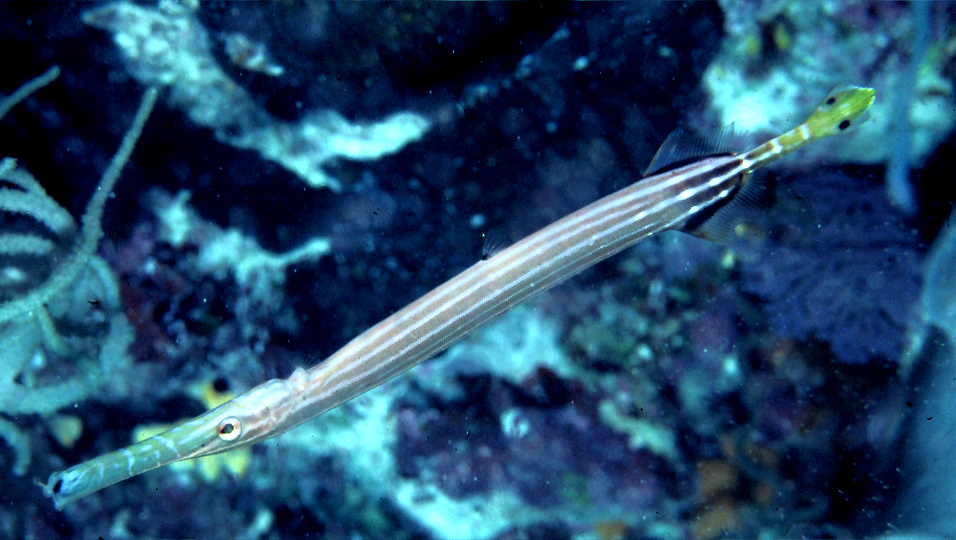
Aulostomus chinensis (Linnaeus, 1766) (Chinese trumpetfish)
Found in clear, shallow water , in rocky and coral areas of protected and seaward reefs . Benthopelagic . Feeds on small fishes and shrimps . A slow-moving fish relying partly on stealth and camouflage to sneak up on unsuspecting prey. Often darts down vertically on its prey. Usually solitary .
Compartir en redes sociales
- Facebook:

Personaliza tu texto a compartir, así como su destino (muro, página...) o mándalo como un mensaje privado a un amigo
- Twitter: Tweet Personaliza tu tweet
- Google Plus:
Enlace directo a esta inmersión
- Enlace largo:
- Enlace corto:


 Estamos participando en el concurso de startups Techcrunch Disrupt. Apoya Diveboard votando por nosotros!